

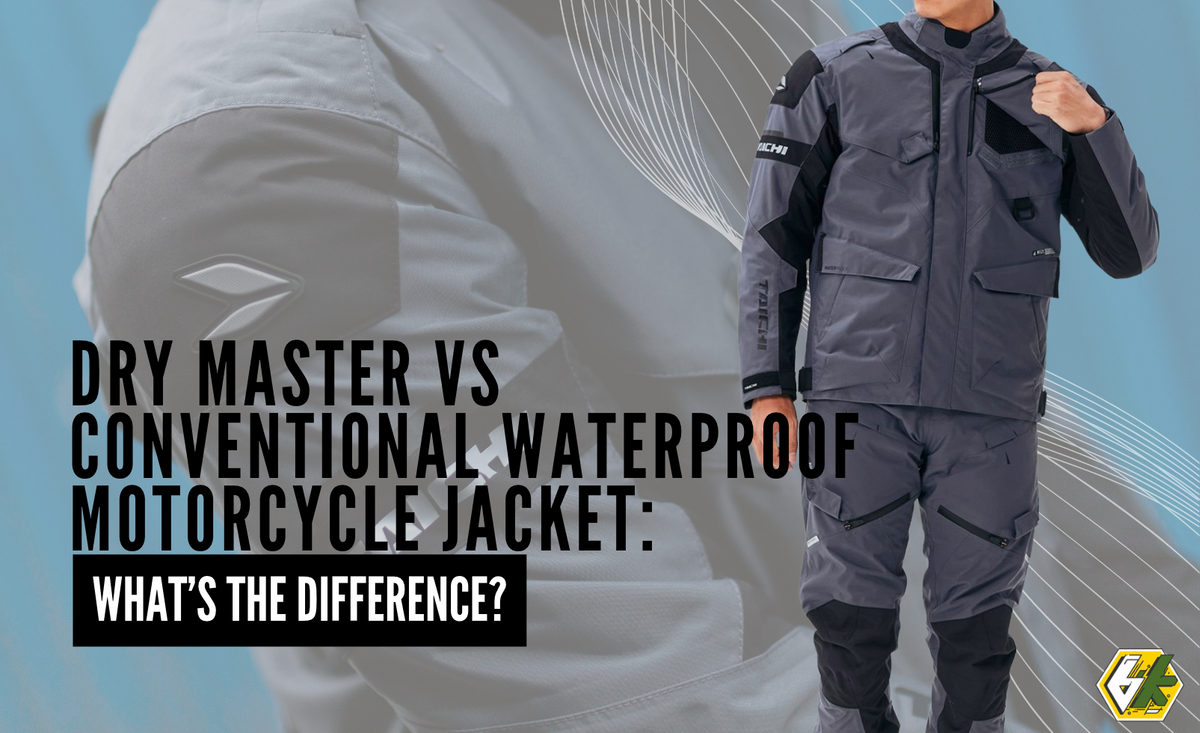
Ever finished a ride in the rain only to realise that staying dry on the outside doesn't always mean feeling comfortable on the inside?
A waterproof motorcycle jacket should do more than keep rain away. During long rides, sweat and body heat can build up inside, making your gear feel damp and uncomfortable. This is why breathability, ventilation and construction matter just as much as waterproofing.
Two approaches worth understanding are conventional waterproofing and DRYMASTER technology. While both are designed to protect riders from rain, their materials and construction methods differ. Understanding these differences can help you choose a motorcycle riding jacket that suits your riding conditions.
What Is DRYMASTER Technology in Motorcycle Riding Jackets?
DRYMASTER is RS TAICHI's original waterproof and breathable material technology. It is designed to prevent water from entering the garment while allowing moisture vapour generated inside to escape.

This moisture permeability helps reduce the damp feeling that can develop when perspiration becomes trapped inside a jacket.
Unlike a generic waterproof coating, DRYMASTER is RS TAICHI's proprietary material technology developed for motorcycle apparel. Depending on the jacket, additional features such as ventilation openings, adjustable closures and removable liners can further improve comfort and adaptability.
For riders, the key consideration is how the material combines waterproof protection and breathability to help manage changing weather conditions.
What Makes a Conventional Waterproof Motorcycle Jacket Different?
Conventional waterproof motorcycle jackets use different materials and construction methods to prevent rain from reaching the rider. These commonly include:

- Waterproof coatings: Applied to fabric to reduce water penetration.
- Waterproof membranes: Designed to block liquid water while allowing moisture vapour to escape.
- Removable waterproof liners: Provide a separate protective layer that can be removed in dry conditions.
- Laminated construction: Bonds a waterproof membrane to the outer fabric, reducing the space where water can accumulate.
Removable liners allow riders to adapt their jackets to changing weather. Laminated constructions generally reduce the space between the outer fabric and waterproof membrane where water can collect.
Not all conventional waterproof jackets perform the same way. Their effectiveness depends on membrane quality, fabric construction, seam sealing and overall garment design.
Conventional waterproof membranes can also offer excellent breathability. What distinguishes DRYMASTER is that it is RS TAICHI's original waterproof and breathable material technology, developed for use in motorcycle apparel.
DRYMASTER vs Conventional Waterproof Motorcycle Jackets: Key Differences
Both approaches aim to keep riders protected from rain, but their materials and construction differ.

| Comparison Factor | DRYMASTER | Conventional Waterproofing |
|---|---|---|
| Technology | RS TAICHI's original waterproof and breathable material technology | Different waterproof materials and technologies |
| Waterproofing | Designed to prevent water penetration | Depends on the membrane, coating or liner |
| Breathability | Allows moisture vapour to escape | Varies according to membrane and material |
| Construction | Uses specialised DRYMASTER material technology | May use integrated membranes, laminates or removable liners |
| Moisture Management | Combines waterproofing with moisture permeability | Depends on fabric and overall construction |
| Ventilation | Depends on individual jacket design | Depends on individual jacket design |
| Practical Considerations | Check the specific DRYMASTER version and garment features | Check membrane specifications, liner arrangement and garment features |
DRYMASTER
Conventional Waterproofing
An important distinction is that breathability and ventilation are not the same thing. Breathability refers to moisture vapour passing through the material, whereas ventilation allows air to flow through designated openings.
A jacket can have breathable fabric but limited ventilation. Similarly, large ventilation panels do not automatically make a jacket waterproof.
Ultimately, the complete jacket construction determines how comfortably it performs in different conditions.
Which Waterproof Riding Jacket Is Better for Different Riding Conditions?
The right choice depends on your riding frequency, climate and typical journeys.

- Long-distance touring: Breathability and moisture management become important over several hours. Look for comfortable construction, effective ventilation and suitable layering options.
- Daily commuting: Riders who regularly encounter unpredictable rain should prioritise dependable waterproofing, practical pockets and adjustable ventilation.
- Warm-weather riding: Breathable materials, adjustable vents and removable liners can help manage changing temperatures.
- Occasional rainy rides: A conventional riding jacket paired with a separate waterproof rain jacket may be a practical alternative when rain protection is only occasionally required.
Neither approach is automatically better for every situation. Consider how frequently you encounter rain and how much flexibility you need throughout the year.
What Should You Look for Before Buying a Waterproof Riding Jacket?
Waterproofing should never be the only deciding factor when choosing riding gear. A good motorcycle riding jacket should combine weather protection, impact protection and everyday functionality.
Here are some important features to evaluate:
- Abrasion resistance: Check the outer fabric and reinforced areas designed to withstand road contact.
- Armour protection: Look for certified shoulder and elbow protectors. CE Level 2 refers to the impact protection rating of the armour, while the jacket's overall protective certification is a separate consideration.
- Ventilation: Adjustable openings help regulate airflow, particularly in warmer conditions.
- Fit and adjustability: Ensure the jacket fits comfortably and keeps protective armour correctly positioned.
- Seam construction: Properly sealed seams help prevent water from entering through stitching.
- Layering options: Removable thermal and waterproof liners offer flexibility across different seasons.
When comparing motorcycle riding jackets, focus on protective specifications, construction and intended riding conditions rather than appearance alone.
Is DRYMASTER Worth Considering?
If you frequently ride in unpredictable weather, DRYMASTER is worth considering for its combination of waterproof protection and moisture permeability. As RS TAICHI's original material technology, it offers riders an option developed around the demands of motorcycle apparel.
Conventional waterproof jackets should not be overlooked either. A well-constructed jacket featuring a quality membrane, effective seam sealing and suitable ventilation can also provide excellent weather protection.
Ultimately, compare the specifications, protective features and construction of individual jackets to find the right option for your riding conditions.
Explore RS TAICHI Riding Jackets at 6KIOM
Choosing the right riding jacket means finding the balance between protection, comfort and functionality.

Explore the RS TAICHI riding jacket collection at 6KIOM to compare rider-focused designs, waterproof technologies and protective features. Find a jacket that complements your riding style and prepares you for changing weather conditions.


